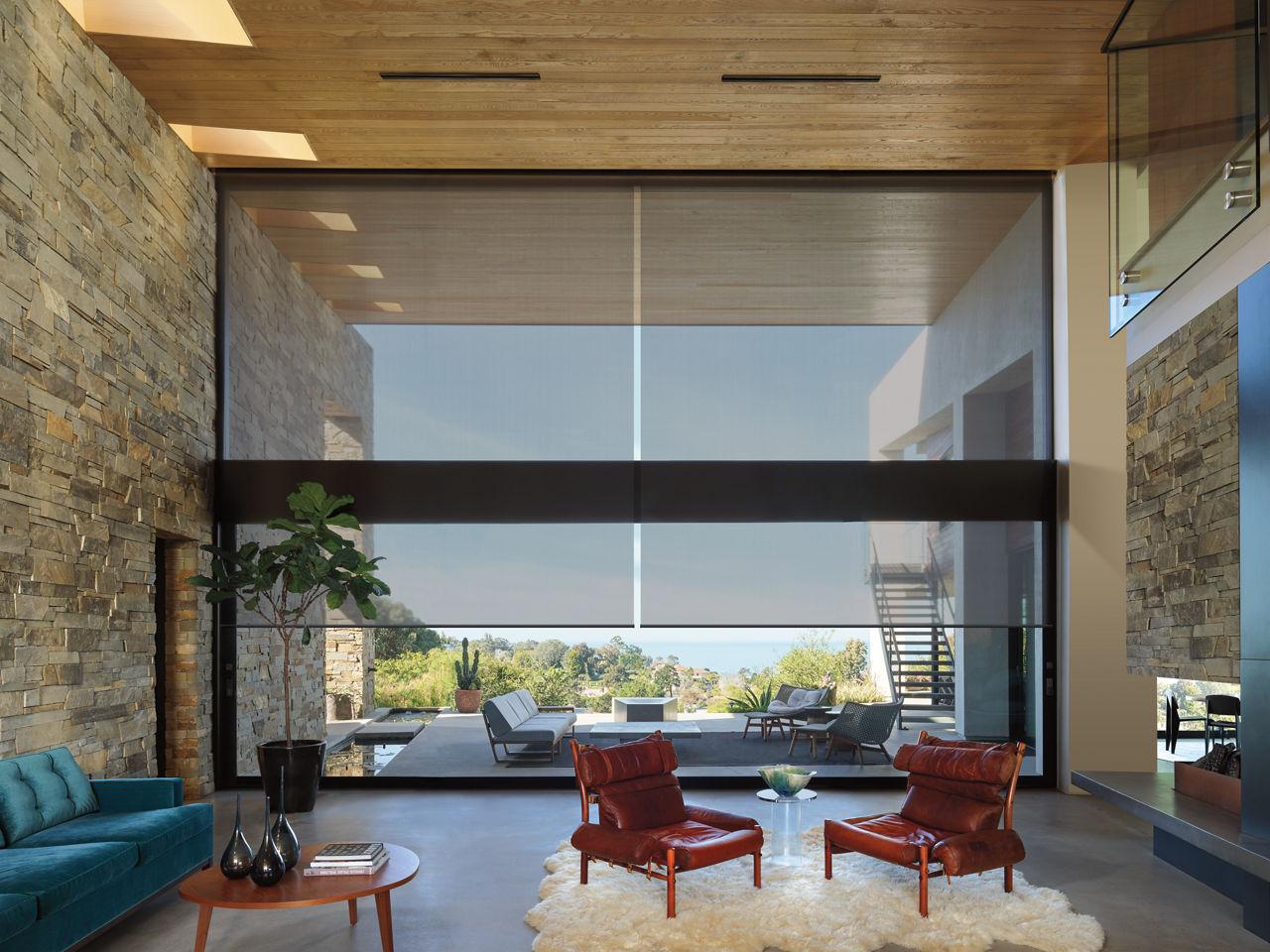

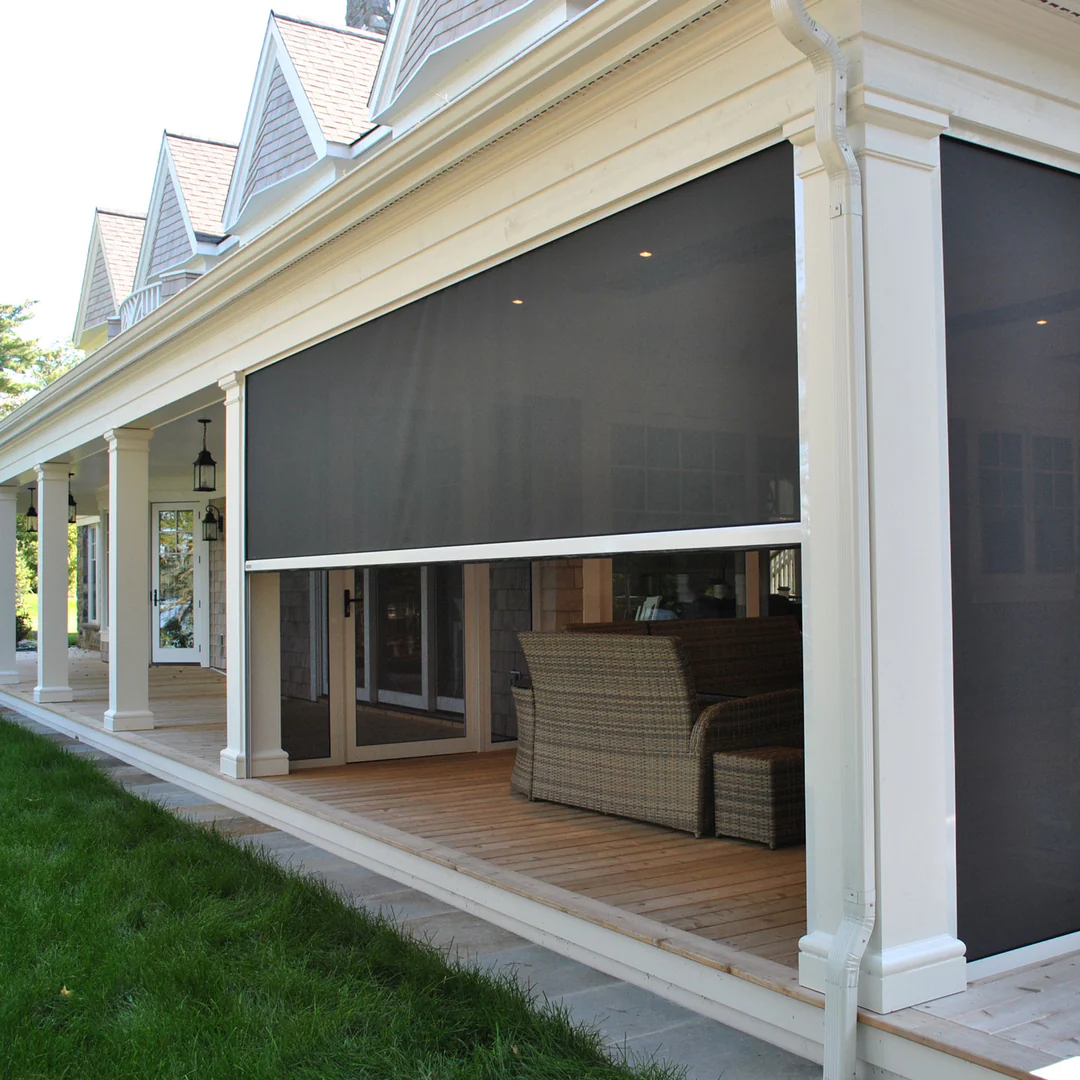
Motorized exterior roll screens can make outdoor living spaces significantly more comfortable by reducing glare, blocking heat, increasing privacy, and helping protect outdoor furnishings from sun exposure.
However, not all exterior screen systems are created equal. The wrong purchasing decision can lead to disappointing performance, costly repairs, or the need for premature replacement.
Before investing in motorized exterior screens, here are three common mistakes homeowners should avoid.
Mistake #1: Focusing on Price Instead of Long-Term Reliability
One of the biggest mistakes homeowners make is assuming that all motorized exterior screens are essentially the same product with different price tags.
They aren’t.
When shopping online, it’s easy to find motorized exterior screens on Amazon, large online marketplaces, and direct-to-consumer websites that appear significantly less expensive than professionally installed systems.
The photos often look impressive, and the specifications can sound similar.
What many homeowners discover later is that exterior screens are only as good as the components behind them.
Motor quality, track design, fabric tensioning systems, weather resistance, and long-term parts availability all play a major role in how well a screen performs after years of use.
Premium manufacturers such as Sunesta, Talius, and MagnaTrack have built reputations around commercial-grade components, engineered track systems, reliable motors, and dealer support networks. These systems are specifically designed to withstand years of outdoor exposure and daily operation.
In contrast, many lower-cost online products prioritize affordability over durability. While some may perform adequately for a period of time, homeowners often encounter issues such as:
Motors that become noisy or fail prematurely
Screens that drift out of alignment
Excessive fabric movement in windy conditions
Difficulty obtaining replacement parts
Limited warranty support
No local service provider when repairs are needed
The challenge isn’t simply replacing a motor or component. Exterior screens are integrated systems, and sourcing parts for an off-brand product several years later can become difficult—or impossible.
For homeowners planning to remain in their homes long term, reliability is often far more important than saving a few hundred dollars upfront.
When evaluating motorized exterior screens, ask:
What manufacturer built the system?
How long has the company been producing exterior screens?
Is local service available?
Are replacement parts readily available?
What warranty is provided on both the motor and the overall system?
The least expensive option on installation day is not always the least expensive option five years later.
Mistake #2: Underestimating Wind Conditions
Many homeowners focus on sun control and privacy while overlooking one of the most important factors affecting exterior screen performance: wind.
Unlike interior window coverings, exterior screens must withstand real environmental forces. Even a gentle breeze can place substantial stress on a large screen surface.
This is especially important in areas with open views, elevated decks, lakeside properties, golf course homes, or patios that are exposed to prevailing winds.
Choosing a screen system that isn’t designed for your home’s conditions can lead to:
Excessive screen movement
Fabric stretching
Premature wear
Track damage
Reduced motor lifespan
A quality dealer should evaluate factors such as:
Screen width and height
Home orientation
Prevailing wind direction
Patio exposure
Mounting location
Local weather patterns
Some applications may require a heavier-duty track system or a zipper-retention system designed to keep the fabric securely engaged within the tracks.
A professional site evaluation often identifies potential issues before they become expensive problems.
Mistake #3: Choosing Fabric Based on a Small Sample
Screen fabric selection involves more than simply choosing a color.
Unfortunately, many homeowners make decisions based on a small sample swatch without fully understanding how that fabric will perform across a large opening.
A fabric that looks ideal in a showroom may create a very different experience once installed.
For example:
Darker fabrics generally preserve outdoor views better than lighter fabrics.
Tighter weaves provide greater privacy and solar protection but can reduce visibility and airflow.
Different openness factors affect glare reduction, brightness, and heat control.
The same fabric can appear dramatically different depending on the direction the window or patio faces.
Many homeowners discover after installation that they selected more privacy than they wanted—or less sun protection than they expected.
Whenever possible, ask to see larger samples, photographs of completed projects, or actual installations using the same fabric being considered.
Seeing a screen in a real-world setting often provides insights that a small swatch simply cannot.
The Bottom Line
A motorized exterior roll screen is a long-term investment in your home’s comfort, outdoor living space, and overall enjoyment.
The three most common mistakes homeowners make are:
Prioritizing price over long-term reliability.
Failing to account for wind exposure and environmental conditions.
Selecting fabric based on a small sample rather than real-world performance.
A properly designed screen system should operate smoothly, withstand local weather conditions, and provide the right balance of visibility, privacy, and solar protection.
Taking the time to evaluate these factors before purchasing can help ensure that your investment delivers the performance and reliability you expect for many years to come.
If you’re considering motorized exterior roll screens for your home, the team at Factory Rep Blinds can help you compare options, evaluate your home’s specific conditions, and select a system designed for long-term performance.